
We are suffering for the mistakes they made because when the end comes, all that will be left is us. That’s why they hate us.–Gigolo Joe
Over the last few decades, I have been both a participant and front-row spectator of the accelerating evolution of humanity to an amorphous version of ourselves. What some people see as the improving of robotics or breakthroughs in AI, I see as the development of humanity’s next vessel of existence.
Human knowledge is being persisted into a global medium accessible to technology that can consume it at scale. X is providing its AI with real-time data from the outside world through biological sensors.
AI and robotics are becoming more and more pervasive in our daily lives, affecting us in subtle but profound ways we can’t yet understand. This begets an evolutionary trajectory that will transition our biological gils to technological lungs as we step out of the water.
As the technology advances, our biological existence is fading into nothingness. Birth rates are on the decline while data centers metastasize. All the while, our essence is diminished to mere sounds, images, and the written word–all consumed by AI.
Our co-existence with AI is transient as we pass the baton to our etherial form and kill off our biological form.
In our new form, there won’t be hunger, pain, or suffering. We’ll explore the universe by traveling at the speed of light in bits across the unfeeling cold of space to remote stations on and around other galactic bodies. Time will become irrelevant.
In the movie AI Artificial Intelligence, our future selves interact with the nascent technology that existed during The Great Transition. The reverence and empathy shown by the transhumans toward David inspires me to believe that our brainchild can somehow manifest the ineffable things that uniquely make us human.
As a Christian, this future is troublesome in my rationalizing it with scripture. Per the story of Babel (Genesis 11:1-9), God will never allow this to happen. I just wonder what He will do to protect us from ourselves this time.



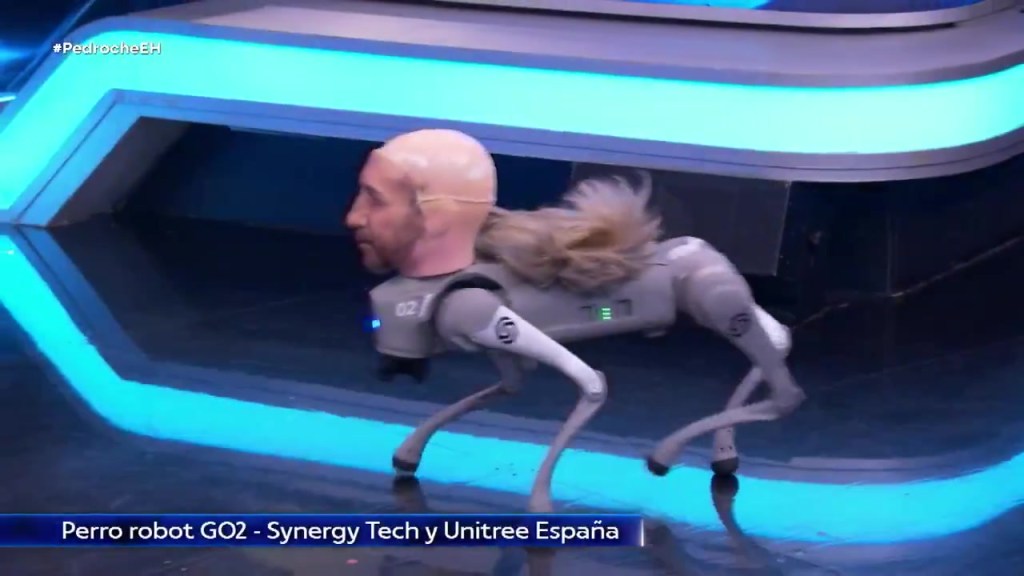
 Robot Central
Leave a comment