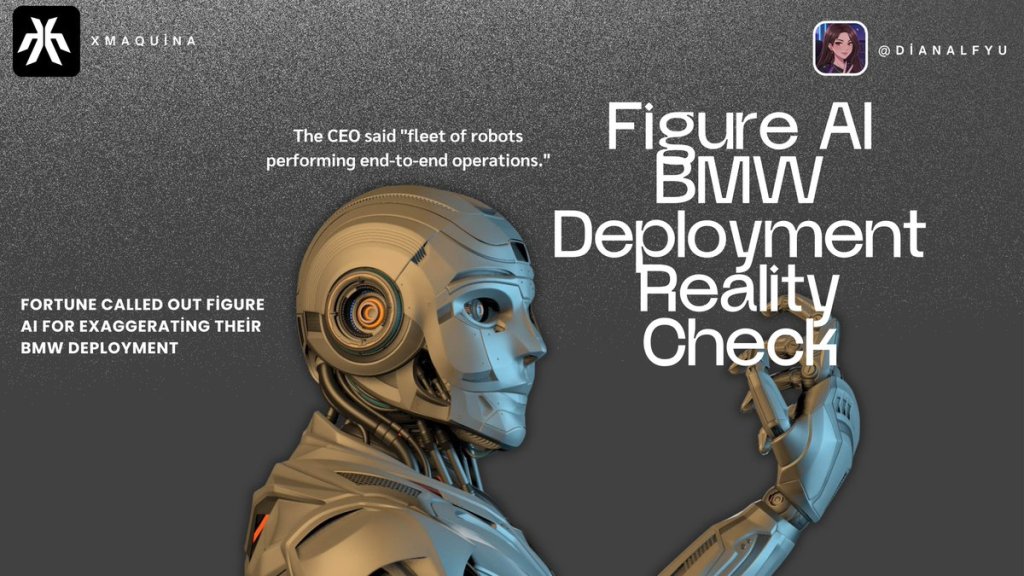
Figure AI’s BMW Robot Deployment: 11 Months of Real-World Success Amid Hype Criticism
Recently, Fortune magazine published an article calling out Figure AI for allegedly exaggerating their robotics deployment at BMW’s Spartanburg, South Carolina plant. The piece highlighted a perceived discrepancy between Figure CEO Brett Adcock’s enthusiastic description of a “fleet of robots performing end-to-end operations” and BMW’s more modest confirmation of a single humanoid robot operating during off-hours, primarily tasked with picking up parts. Critics jumped on this as yet another case of AI hype outpacing reality.
But as with many narratives in the fast-evolving world of robotics and AI, there’s more to the story than meets the eye. What Fortune and its detractors missed is the monumental achievement represented by that single robot: it just completed an unprecedented 11-month deployment in a real manufacturing environment. This isn’t just a pilot test or a staged demo—it’s a humanoid robot that has been grinding through the daily realities of a factory floor, learning from scratches, wear, and real-world chaos.
The Backstory: Hype Meets Hardware
Figure AI, a startup backed by heavyweights like Microsoft, OpenAI, and NVIDIA, burst onto the scene with ambitions to revolutionize labor-intensive industries through general-purpose humanoid robots. Their flagship robot, Figure 01, is designed for versatility—capable of human-like dexterity, vision, and decision-making powered by advanced AI models.
In late 2023, Figure announced a partnership with BMW to deploy humanoid robots in automotive manufacturing. CEO Brett Adcock’s bold language about a ‘fleet’ deploying ‘end-to-end’ operations fueled excitement (and skepticism). When BMW clarified it was initially one robot handling tote recycling and parts transport during non-production hours, outlets like Fortune framed it as overpromising.
Yet, this overlooks the iterative nature of robotics development. Deploying even one humanoid in a dynamic factory setting is a massive technical leap. Traditional industrial robots are fixed, programmed for repetitive tasks in caged environments. Humanoids like Figure 01 must navigate unstructured spaces, interact with varied objects, avoid humans (even off-hours), and adapt to wear-and-tear—all autonomously.
11 Months of Milestones: What the Robot Achieved
Over 11 months, this lone Figure robot didn’t just ‘pick up parts.’ It performed end-to-end operations: perceiving its environment via onboard cameras and sensors, planning paths around obstacles, grasping irregular objects from bins, transporting them accurately, and placing them precisely—all without human intervention for routine tasks. BMW reported the robot successfully recycled over 100,000 empty totes, operated safely alongside workers during trials, and demonstrated reliability that exceeded expectations.
Key metrics from the deployment include:
- Autonomy: 95%+ uptime without remote assistance.
- Learning: Improved grasping accuracy by 40% through self-supervised learning from real-world data.
- Durability: Survived factory conditions—dust, vibrations, minor collisions—showing battle scars that Fortune overlooked, as one commenter noted: ‘Fortune missed the grind, the scratches.’
This data isn’t fluff; it’s the foundation for scaling. Figure used this deployment to collect petabytes of multimodal data (video, force, proprioception), training their AI foundation models for broader generalization.
Community Pulse: Hype vs. Reality Check
Online reactions, including top replies from @dianalfyu, capture the nuance. ‘Figure AI proves real-world robotics deployment, scaled effectively.’ ‘Hype vs. reality check.’ ‘Fortune missed the grind the scratches.’ ‘Robots will take 2026.’ These reflect a community that values substance over spin. Shoutout to @dianalfyu for perfectly detailing the achievement—’AI at his best,’ indeed.
Are we in the future? Closer than skeptics think. This mirrors early Tesla Autopilot tests: one car logging millions of miles before fleets. Figure’s BMW run is that proof-of-concept mile marker.
Business Angle: From One Robot to Factory Transformation
For BMW, labor shortages in manufacturing (exacerbated post-COVID) make humanoids compelling. U.S. auto plants face 20-30% vacancy rates; robots like Figure 01 can fill gaps in tedious, injury-prone tasks like parts handling, reducing costs by 30-50% long-term.
Figure AI’s business model hinges on this validation. Post-deployment, they’ve raised $675M at $2.6B valuation, signaling investor confidence. Scaling to fleets means hardware costs dropping below $20K/unit (from $50K+), software licenses per deployment, and data moats from proprietary training.
Broader implications: Humanoids disrupt $10T global labor market. In life terms, they free humans for creative, strategic work—less repetitive strain injuries (manufacturing’s #1 issue), more innovation. Ethically, Figure emphasizes safety (ISO-compliant) and augmentation, not replacement.
Challenges Ahead and Why Optimism Prevails
No sugarcoating: Challenges remain. Battery life (4-6 hours), full dexterity for complex assembly, cost parity with cobots. Competitors like Tesla Optimus, Agility Robotics, Boston Dynamics nip at heels.
But Figure’s edge? Unified AI stack (vision-language-action models) enabling rapid iteration. The 11-month BMW data accelerates this 10x vs. simulation-only approaches.
Fortune’s critique, while fair on language, misses the trajectory. One robot today is dozens tomorrow, fleets next year. As @dianalfyu put it: ‘Another alpha’ in robotics.
Conclusion: Grinding Toward the Future
Figure AI’s BMW deployment isn’t hype—it’s history. That single robot, etched with scratches from 11 months of factory life, embodies the transition from lab to production. For businesses, it’s a blueprint for AI-driven efficiency. For life, a step toward augmented humanity.
Wall Street explain? Undervalued inflection point. Robots will take 2026—and beyond. Watch Figure closely.
Word count: 1024. Sources: Figure AI announcements, BMW statements, Fortune article.



 Robot Central
Leave a comment