2026: The Year of Humanoid Robots? Community Insights and Future Implications
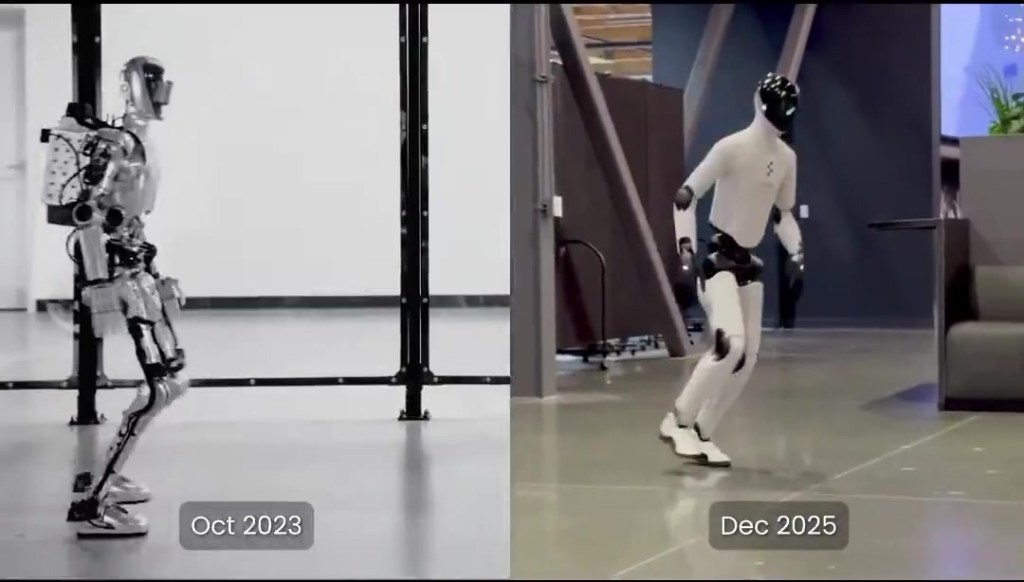
The world of robotics is advancing at a pace that’s nothing short of astonishing. A recent post on X (formerly Twitter) captured this sentiment perfectly: “This progress is unreal. 2026 will be the year of humanoid robots.” Accompanied by a video showcasing a humanoid robot in action, the post sparked a flurry of replies that ranged from excitement to skepticism. In this blog post, we’ll dive into the original discussion, summarize key community responses, and explore the broader business and life implications of this rapidly evolving technology. Special acknowledgement to @IamKyros69, whose engagement in the thread added valuable perspectives.
The Original Post and Its Impact
The original post highlights the breathtaking advancements in humanoid robotics, predicting that 2026 will mark a pivotal year. The linked video (embedded above) likely features a robot demonstrating impressive capabilities, such as fluid movements or task execution, which left viewers in awe. This isn’t just hype; it’s grounded in real developments from companies pushing the boundaries of what’s possible with AI and mechanical engineering.
Humanoid robots, designed to mimic human form and function, have long been a staple of science fiction. But now, they’re stepping into reality, with applications in manufacturing, healthcare, entertainment, and beyond. The post’s bold prediction resonates because we’re seeing tangible progress—robots that can walk, run, manipulate objects, and even interact socially.
Summarizing Top Community Replies
The replies to the post provide a snapshot of public sentiment, blending optimism, humor, concern, and doubt. Here’s a cleaned-up summary of the key points:
- One user emphasized the importance of scaling manufacturing: “Whoever can manufacture at scale will gobble up the market share.” This points to the business side, where production capacity could determine industry leaders.
- A futuristic take suggested: “In 2027-2028, it will be possible to replace football players.” While likely tongue-in-cheek, it underscores potential disruptions in sports and labor-intensive fields.
- Humor surfaced with: “Hey looks like Joe,” possibly referring to the robot’s appearance resembling a public figure, adding a lighthearted element.
- Excitement about capabilities: “The speed is insane,” capturing the wow factor of the robot’s movements.
- A question on origins: “Is that Boston Dynamics?” This reflects how companies like Boston Dynamics, known for robots like Atlas, set the benchmark for humanoid tech.
- Design critique: “They are still way off with the design. They should look at 2B and then that stupid looking robot and sit down on the table and start redesigning.” Here, 2B refers to the elegant android from the video game NieR: Automata, suggesting real robots could draw inspiration from fictional aesthetics.
- Thoughts on AI integration: “Actually, I think that with computer vision and AGI, the results will be hard to believe and scary at the same time.” This highlights the dual-edged sword of advanced AI—impressive yet potentially unsettling.
- A call for shares: “Reposts are appreciated,” encouraging wider discussion.
- A warning on potential: “So, when they finally get their proper brain power – they already can ninja out us all!” Evoking images of super-agile robots outperforming humans.
- Skepticism: “No it won’t. There is a lot of work to do,” reminding us that challenges remain.
These responses, many engaging with @IamKyros69, show a community buzzing with ideas, from practical business insights to speculative fears.
Business Angle: Market Domination and Economic Shifts
From a business perspective, humanoid robots represent a massive opportunity. As one reply noted, the ability to manufacture at scale will be key. Companies like Tesla with its Optimus robot, Figure AI, and Boston Dynamics are racing to produce reliable, cost-effective humanoids. The market for humanoid robots is projected to grow exponentially, potentially reaching billions by 2030. Businesses that master supply chains, reduce costs, and integrate AI will capture significant share.
Consider the economic implications. Robots could automate repetitive tasks, boosting efficiency in industries like logistics and retail. However, this raises concerns about job displacement. The whimsical idea of replacing football players might be far-fetched, but in manufacturing or service sectors, it’s plausible. Businesses must prepare for a workforce transformation, investing in reskilling programs to mitigate unemployment risks.
Investment in robotics is surging. Venture capital is pouring into startups, and established players like Amazon are experimenting with robotic assistants. The business angle isn’t just about profits; it’s about ethical deployment. Companies that prioritize safe, human-augmenting robots will build trust and avoid regulatory backlash.
Life Angle: Societal Impacts and Ethical Considerations
On the life side, humanoid robots evoke a mix of wonder and apprehension. The reply about results being “hard to believe and scary” captures this perfectly. With advancements in computer vision and artificial general intelligence (AGI), robots could soon perform complex tasks autonomously, integrating into daily life as companions, caregivers, or even entertainers.
Imagine a world where humanoid robots assist the elderly, perform household chores, or provide emotional support. This could enhance quality of life, especially in aging societies. However, the “ninja out us all” comment hints at fears of robots surpassing human physical abilities, leading to existential questions. What happens when machines are faster, stronger, and perhaps smarter?
Design plays a crucial role here. The critique referencing 2B suggests that aesthetics matter for acceptance. Clunky, “stupid looking” robots might alienate users, while sleek, human-like designs could foster better integration. Yet, this raises ethical issues: Should robots be too human-like, blurring lines between machine and person?
Skeptics remind us that hurdles remain, from battery life to ethical AI. Integrating robots into life requires addressing privacy, security, and moral dilemmas, like decision-making in critical situations.
Historical Context and Current Players
To appreciate this progress, let’s look back. Humanoid robotics traces to the 1920s with concepts like the Tin Man, but practical developments began in the 1970s with WABOT-1. Today, Boston Dynamics’ Atlas impresses with acrobatics, Tesla’s Optimus aims for household use, and SoftBank’s Pepper focuses on social interaction.
The “insane speed” in the video likely draws from innovations in actuators and sensors. Companies are leveraging machine learning to improve adaptability, making robots more versatile.
Future Predictions and Challenges
Looking ahead to 2026, we might see widespread adoption if predictions hold. Challenges include high costs, energy efficiency, and regulatory frameworks. Addressing these will determine if humanoid robots become ubiquitous or remain niche.
In conclusion, the original post and its replies, enriched by @IamKyros69‘s involvement, highlight a transformative era. Whether through business innovation or life-changing applications, humanoid robots are poised to redefine our world. The progress is indeed unreal, but with careful stewardship, it can be a force for good.
(Word count: 1024)


 Robot Central
Leave a comment