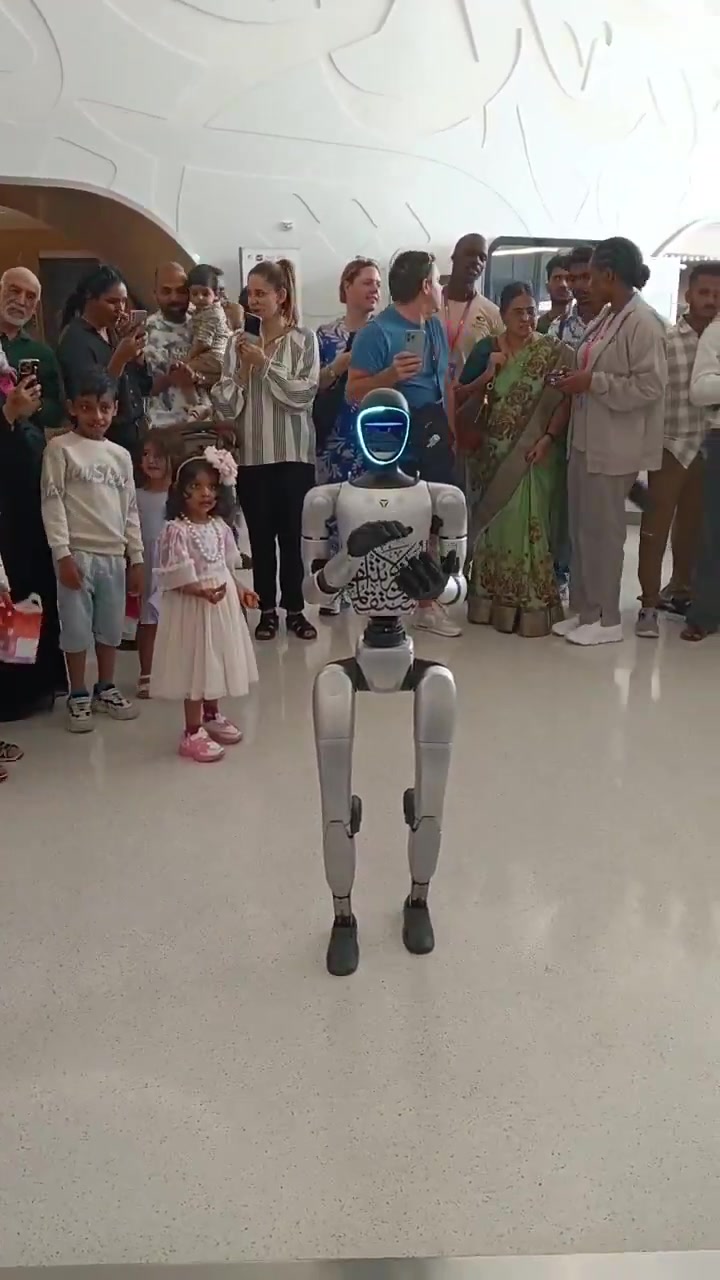
Embracing Tomorrow: Insights from Ameca the Robot at Dubai’s Museum of the Future
In the heart of Dubai, a city synonymous with innovation and futuristic visions, stands the Museum of the Future. This architectural marvel isn’t just a building; it’s a portal to what lies ahead in technology, society, and human potential. Recently, a post about a remarkable exhibit there caught my attention: the humanoid robot Ameca. The original post, shared in Hindi, translates to a powerful reminder that the technology of tomorrow is already at our doorstep today. It urges us not to fear these advancements but to learn from them and create alongside them. If machines like Ameca can evolve so rapidly, why shouldn’t we humans push our boundaries too?
This sentiment resonates deeply in a world where artificial intelligence and robotics are no longer science fiction but integral parts of our daily lives. The post received engaging replies, including from @mdtanveer87, who simply noted “Robot” and followed up with “Technology is changing all spheres of our life.” These comments highlight the universal awe and recognition of how tech permeates everything from business to personal growth. In this blog post, we’ll dive deeper into Ameca, the Museum of the Future, and the broader implications for business and life. We’ll explore how embracing such innovations can transform industries, inspire personal development, and foster a mindset of continuous learning.
Introducing Ameca: The Humanoid Robot Redefining Interaction
Ameca is not your average robot. Developed by Engineered Arts, a UK-based company specializing in humanoid robotics, Ameca is designed to be one of the most advanced humanoid robots available today. What sets Ameca apart is its incredibly lifelike facial expressions, powered by sophisticated AI that allows it to mimic human emotions with uncanny accuracy. From a subtle smile to a thoughtful frown, Ameca’s interactions feel almost human, bridging the gap between machine and man.
At the Museum of the Future in Dubai, Ameca serves as a star attraction, engaging visitors in conversations about technology, ethics, and the future. The museum itself is a testament to Dubai’s ambition to be a global hub for innovation. Shaped like a torus with Arabic calligraphy etched into its facade, it houses exhibits on space exploration, bioengineering, and AI, all aimed at inspiring visitors to think about sustainable futures.
The original post captures this essence perfectly: standing before Ameca, one can’t help but feel a mix of wonder and motivation. It’s a call to action—don’t fear the rise of machines; instead, use them as a catalyst for human progress. As @mdtanveer87 pointed out, technology like this is reshaping every aspect of our existence, from how we work to how we connect with others.
The Business Angle: How Robots Like Ameca Are Transforming Industries
From a business perspective, Ameca represents the cutting edge of AI integration in various sectors. In customer service, for instance, humanoid robots could revolutionize interactions by providing personalized, empathetic responses that traditional chatbots can’t match. Imagine walking into a bank or a hotel and being greeted by a robot that not only answers your queries but also reads your emotions and adjusts its tone accordingly. This isn’t far-fetched; companies are already piloting such technologies to enhance user experience and efficiency.
In manufacturing and healthcare, robots like Ameca could take on roles that require precision and empathy. In elder care, for example, they could provide companionship and monitor health metrics, addressing labor shortages in an aging global population. Businesses that adopt these technologies early stand to gain a competitive edge, reducing costs and improving outcomes. According to reports from McKinsey, AI could add up to $13 trillion to global GDP by 2030, with robotics playing a key role in that growth.
However, this transformation isn’t without challenges. Ethical considerations, such as job displacement and data privacy, must be addressed. Businesses need to invest in reskilling programs to ensure their workforce can collaborate with AI rather than compete against it. The message from the original post—learning and creating—is crucial here. Companies that foster a culture of innovation will thrive, turning potential threats into opportunities.
Drawing from @mdtanveer87‘s reply, technology’s influence on all spheres means businesses must adapt holistically. It’s not just about implementing robots; it’s about rethinking organizational structures, supply chains, and customer engagement strategies in light of these advancements.
The Life Angle: Personal Growth in the Age of AI
Beyond business, Ameca’s presence at the Museum of the Future prompts profound reflections on personal life. In an era where AI can compose music, write articles, and even create art, what does it mean to be human? The post reminds us that if machines can advance, so can we. It’s an invitation to lifelong learning, to embrace curiosity and creativity as our unique strengths.
Consider how technology changes daily routines, as @mdtanveer87 noted. Smart assistants manage our schedules, fitness trackers monitor our health, and virtual reality offers new ways to learn and explore. But rather than becoming passive consumers, we should actively engage—learning to code, understanding AI ethics, or even building our own projects. This mindset shift can lead to greater fulfillment and resilience in a fast-changing world.
For individuals, visiting places like the Museum of the Future or interacting with Ameca can be transformative. It sparks questions: How can I use technology to improve my life? What skills should I develop to stay relevant? The fear of obsolescence is real, but the post counters it with optimism—it’s time to learn and make.
Ethical and Societal Implications
As we delve deeper, it’s essential to discuss the ethics surrounding humanoid robots. Ameca’s lifelike qualities raise questions about AI sentience and rights. Should robots have protections? How do we prevent misuse in areas like surveillance or manipulation? The Museum of the Future addresses these through interactive exhibits, encouraging visitors to ponder sustainable and equitable tech development.
In business, ethical AI adoption means transparent algorithms and bias mitigation. For life, it involves digital literacy to navigate an AI-driven world responsibly. Governments and organizations, like those in Dubai, are leading by example, investing in frameworks that balance innovation with humanity.
Case Studies and Real-World Applications
To illustrate, let’s look at real-world examples. In Japan, robots like Pepper are used in retail and hospitality, enhancing customer service. In the US, companies like Boston Dynamics are pushing robotic mobility, with applications in logistics and search-and-rescue. Ameca builds on this, focusing on social interaction, which could extend to education—imagine robots as tutors that adapt to a student’s emotional state.
In Dubai, the government’s Vision 2031 emphasizes AI as a pillar of economic diversification. The Museum of the Future is part of this, showcasing how tech can solve global challenges like climate change and resource scarcity.
Conclusion: A Call to Action
The robot Ameca at Dubai’s Museum of the Future is more than an exhibit; it’s a symbol of human ingenuity and potential. As the original post and replies from users like @mdtanveer87 suggest, technology is evolving rapidly, touching every sphere of life. For businesses, it’s an opportunity to innovate and grow. For individuals, it’s a prompt to learn, create, and adapt.
Don’t stand by in fear—dive in. Visit the museum if you can, explore AI tools, and think about how you can contribute to this future. If machines can reach such heights, imagine what we humans can achieve together. Let’s embrace tomorrow today.
(Word count: 1024)
 Robot Central
Leave a comment