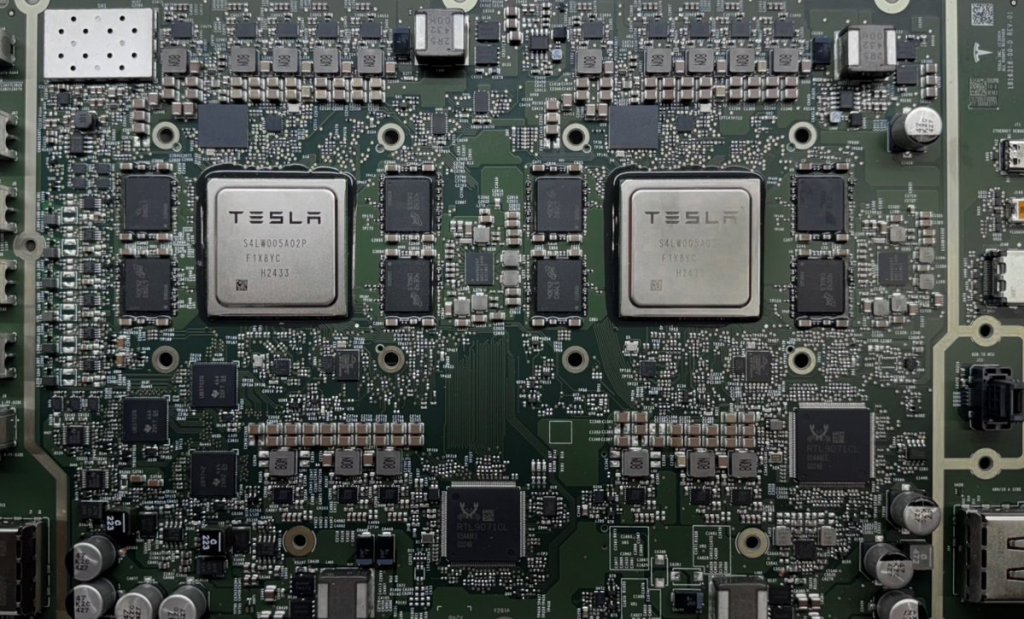


In the vast expanse of technological evolution, much like the stars that dot our night sky, innovations emerge that redefine our understanding of possibility. Behold the AI4 brain, the pulsating core animating Tesla’s Optimus robot and Full Self-Driving systems. This marvel of engineering, a symphony of silicon and ingenuity, encapsulates the essence of human ambition to transcend limitations.
Imagine, if you will, a neural nexus where algorithms dance in harmony, processing data at speeds that mimic the swiftness of cosmic rays traversing the void. The AI4 is not merely a chip; it is a testament to integrated design, where hardware and software converge to enable machines to perceive, learn, and act with uncanny precision. In Optimus, this brain empowers a humanoid form to navigate our world, performing tasks with grace and intelligence, echoing the adaptive prowess seen in nature’s own creations.
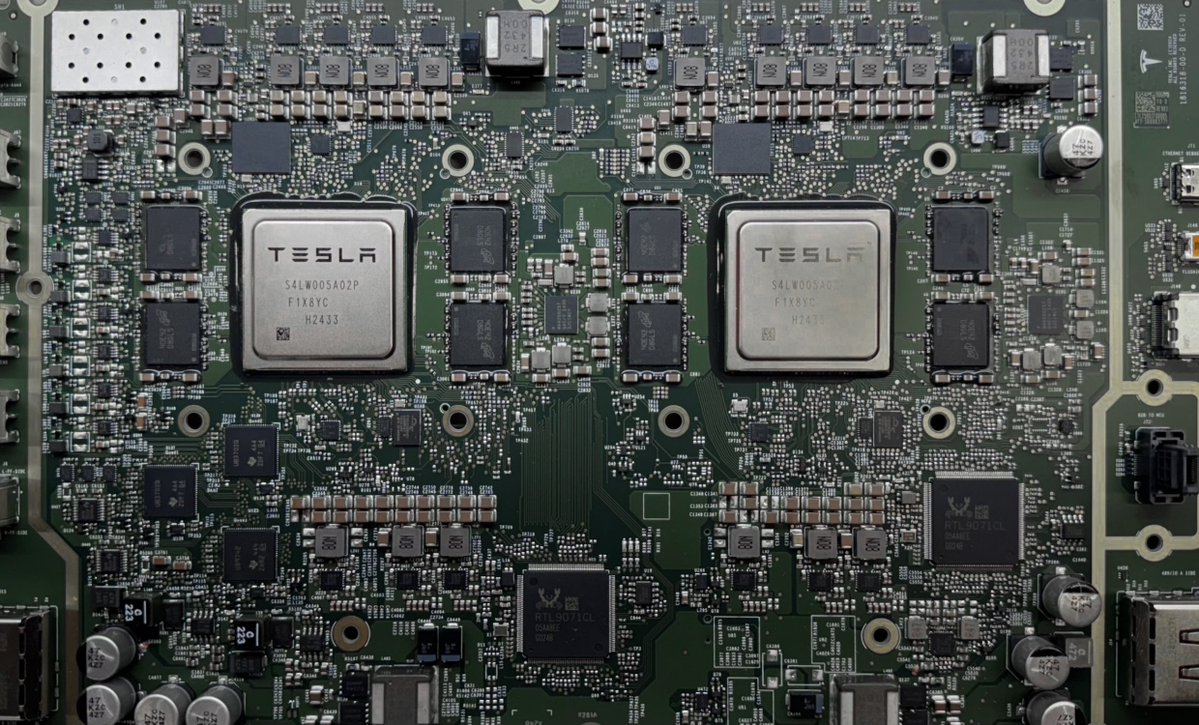
Yet, as we gaze upon this technological wonder, we are reminded of our place in the grand narrative of progress. Just as the universe expands with elegant complexity, so too does our capacity to innovate. The AI4 stands as a beacon, illuminating paths toward a future where artificial minds augment our own, fostering harmony between humanity and machine. In this dance of electrons, we glimpse the infinite potential that lies ahead, a cosmos of possibilities waiting to be explored.
 Robot Central
Leave a comment