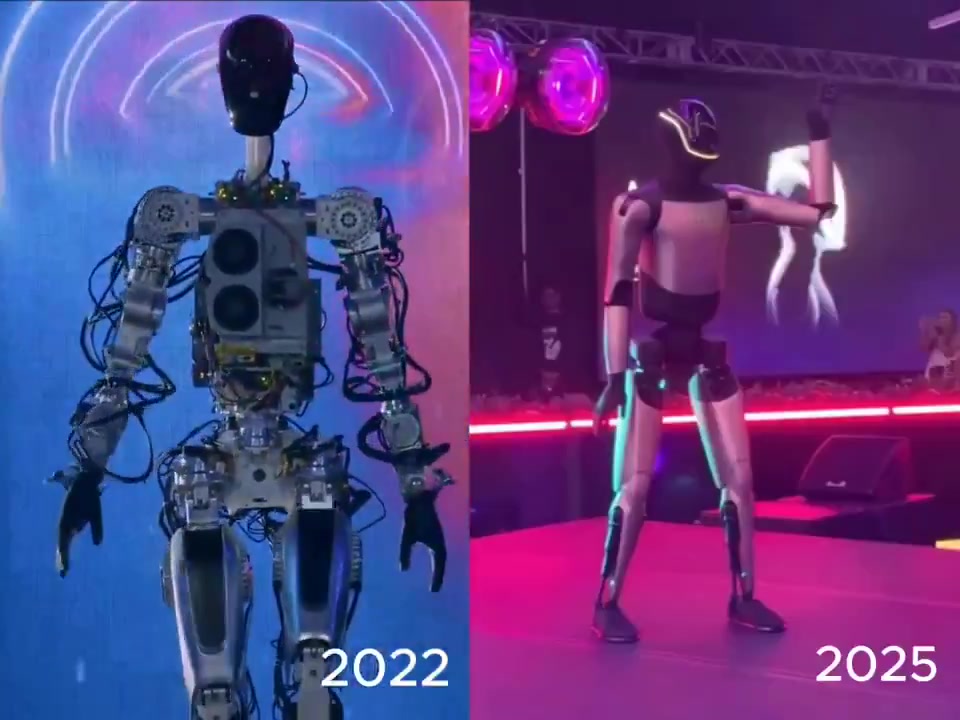


Watching Tesla’s Optimus evolve from its 2022 debut to the 2025 version feels like peeking into the future–a future that’s arriving faster than we thought. The initial model was clunky, more concept than reality, stumbling through basic movements. Now, it’s fluid, precise, handling tasks with an eerie competence that hints at broader applications in manufacturing and beyond.
Three years might seem short, but in tech, it’s an eternity of iterations. Replies to the original post capture this excitement: one user quips about a 2026 dance-off on the moon, another urges to ‘make it exist… Polish later.’ It’s that blend of whimsy and pragmatism that drives innovation.
What strikes me is the exponential curve–not just progress, but a phase shift, as one commenter noted. The hands, once rigid, now mimic human dexterity, promising efficiency gains in sectors like logistics. Yet, amid the hype, there’s a call for diversity, like a female bot, reminding us technology should reflect humanity.
For businesses, this means rethinking labor: robots could augment workforces, not replace them, fostering new opportunities. In life, it’s about adaptation–embracing tools that enhance our capabilities. As someone tracking these developments, I see Optimus not as a gimmick, but a harbinger of symbiotic human-robot futures. Huge advancement, indeed, and I’m eyeing that 2026 release too.

 Robot Central
Leave a comment