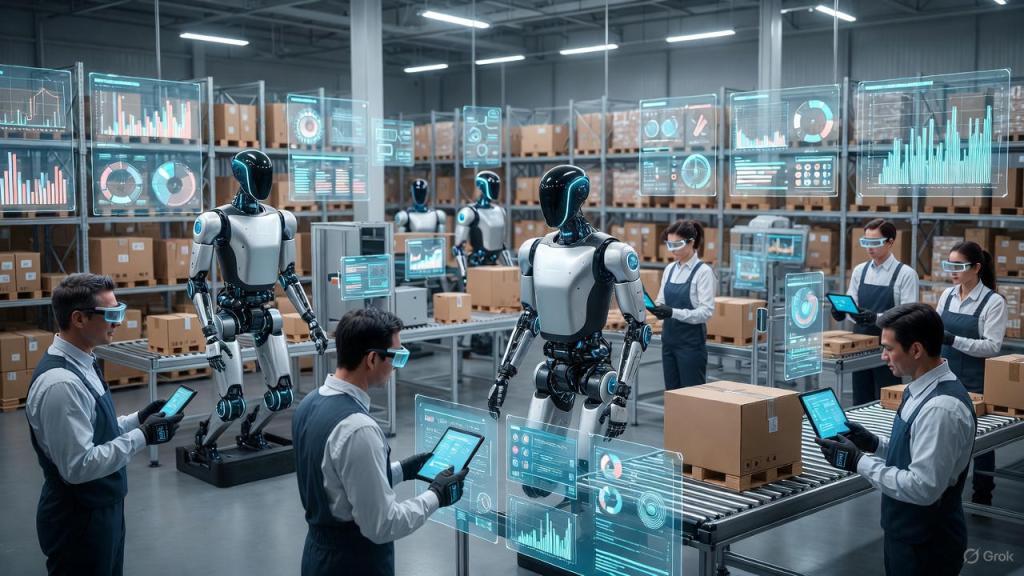


I’ve been writing a lot about humanoid robots lately, but my interest has been “meta”. What I mean by “meta” is that it’s not so much about the coolness of the robots, it’s about the impact robots will have on society. I haven’t exactly connected the dots here, and there are a lot of human-nature obstacles, but I firmly believe that there is evidence that we’re trending towards an Age of Abundance.
How? Well, for one thing the cost of goods will plummet by automating menial tasks and using AI to make humans more efficient. Not to put too fine a point on it: Automation will define the next decade of warehousing, but it will not eliminate the need for people; it will expose how poorly most operations use the people they already have. The real competitive edge for companies making up the supply chain comes from automating repetitive work while deliberately engineering high‑value human work around data, foresight, and continuous decision‑making.
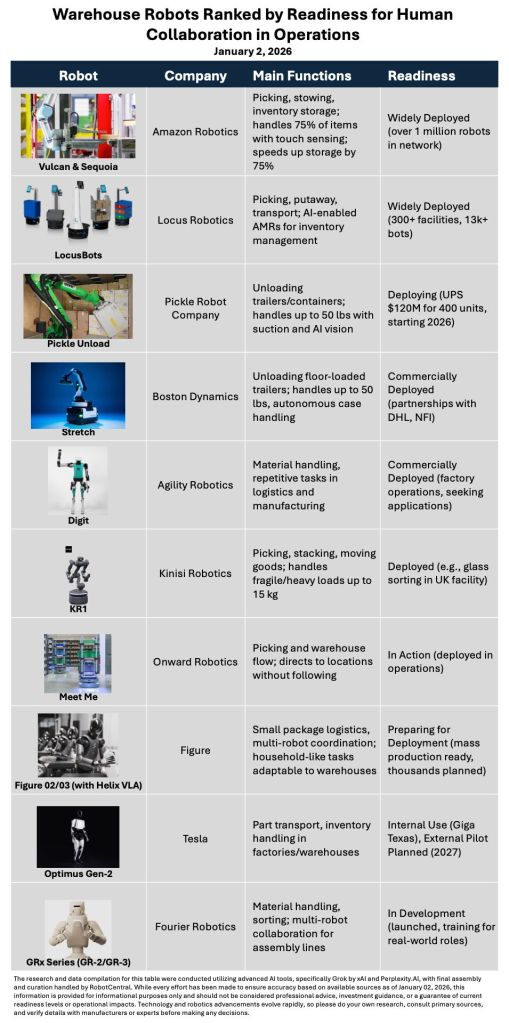
Robert Playter, CEO of Boston Dynamics, has said that their robots are meant to be “a power tool for people who would be working in that place already… a path for advancing their own skills.” This is not about replacing human labor. It’s about upgrading human labor. CognitOps says that “Even with automation in place, managing the human workforce remains critical… labor is allocated where it’s needed most, maximizing overall efficiency and reducing bottlenecks.”
Once robots handle the predictable, the question becomes: “What are people now optimized to do?” The answer requires capabilities that sit -ABOVE- the WMS: real‑time visibility into labor productivity and utilization, unified performance KPIs across the building, and predictive views of workload by area and time. With that intelligence layer, leaders can proactively allocate labor, balance departments to maintain flow, and intervene on at‑risk orders before service levels are hit.
In this model, supervisors no longer chase exceptions on the floor; they manage a portfolio of decisions. They use machine‑learning‑driven forecasts to right‑size headcount by hour, assign specific workers to the tasks where they are historically most productive, and simulate “what‑if” scenarios on overtime, shift changes, and task sequencing. Human labor becomes a dynamic asset, continuously repositioned to the highest‑return activities–and frankly–to keep valuable people engaged.
The warehouses that will pull away in 2026 are those that treat automation and human labor optimization as a single system design problem. Robots execute the routine. Humans, orchestrated by an intelligence layer over existing systems, resolve uncertainty, manage flow, and protect promises to customers. In a narrowing competitive window, that combination of autonomous execution and data‑driven human judgment is the quiet, durable advantage.


 Robot Central
Leave a comment