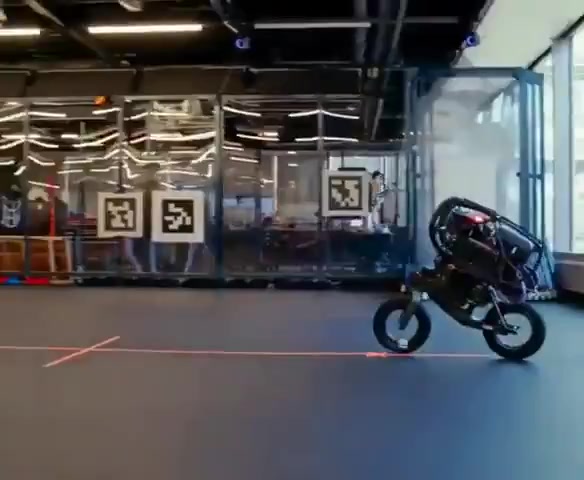
The ETH Zurich developed Swiss robotic motorcycle UMV demonstrated its ability to perform bike jumps and balance tricks which would challenge any professional cyclist while using artificial intelligence for control without depending on gyroscopes.
The vehicle operates in reverse motion while it recovers from accidents and performs one-wheel stunts. The system learned through reinforcement learning methods which used simulation-based rewards to teach it until it achieved perfect performance in the actual task.The system brought back memories of Anthony Levandowski’s GhostRider which he developed for the 2004 DARPA Grand Challenge through self-funded support. The system used sensors and GPS technology which Levandowski funded himself to build in his garage with help from volunteers. The device which aimed to achieve desert autonomy lost its balance during its first few yards of operation. Bold attempt, though.We’ve surged forward since, from basic self-balancing failures to this UMV acing acrobatics. The discussion forum shows widespread amazement about Swiss engineering while users suggest selling to Red Bull for stunt performances and they even make Skynet references yet everyone remains enthusiastic about AI technology in Formula One racing.The technology enables delivery robots and emergency response vehicles to undergo transformation which will allow AI system development for multiple uses while preserving safety protocols. The progress becomes visible to me at this location.Your cart (items: 0)
Subtotal
$0.00
Shipping and discounts calculated at checkout.
Your cart is currently empty!
Leave a Reply