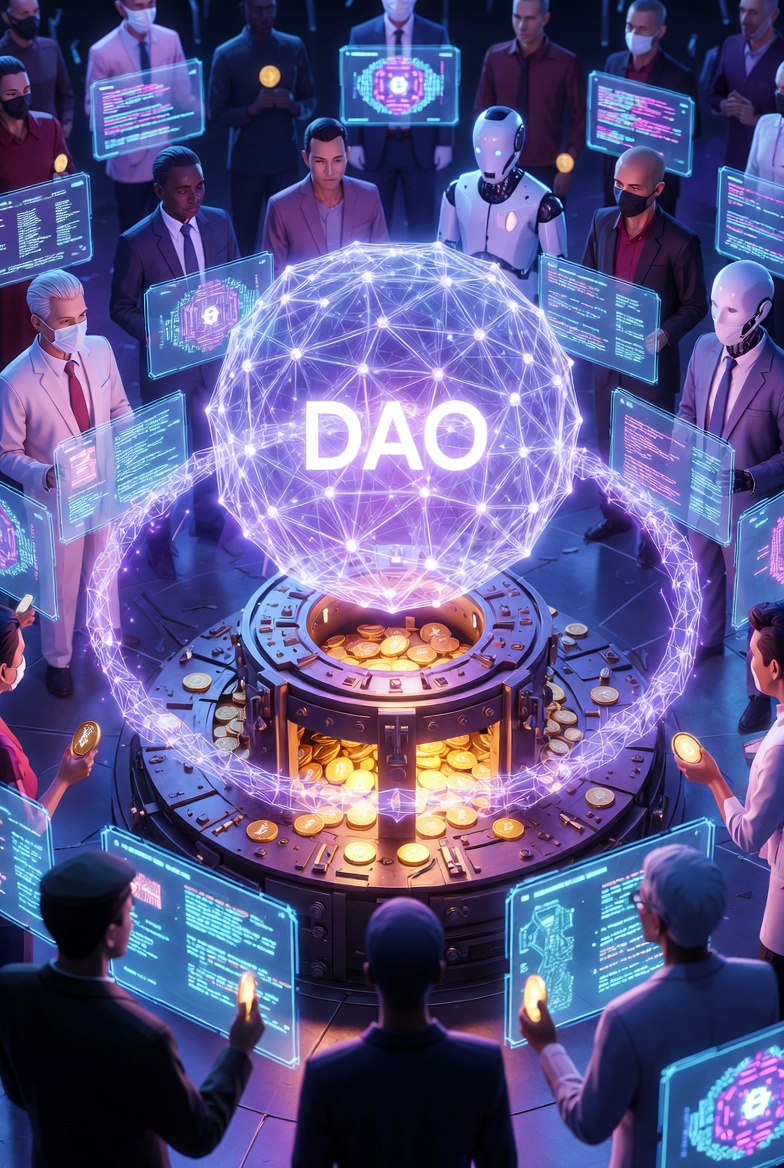
A Decentralized Autonomous Organization, or DAO, are kind of like a mutual fund or venture capital firm, but with a blockchain that democratizes control and minimizes intermediaries. Imagine a traditional investment fund where accredited investors pool capital under the guidance of portfolio managers who select assets–say, stakes in emerging tech companies–and distribute returns via dividends or share appreciation. In a DAO, the mechanics are similar: participants contribute funds (often in cryptocurrency) to a shared treasury, which is then deployed into a diversified portfolio, such as private equity in robotics startups like Agility Robotics or Figure AI.
However, unlike a conventional fund where decisions are centralized with a general partner or board—potentially leading to agency risks, high management fees (e.g., the classic “2 and 20” structure), and limited transparency–a DAO operates via smart contracts on a blockchain. These are self-executing code that enforces rules automatically, like an escrow account that only releases funds upon meeting predefined conditions. Governance is handled through token holders, where each token (like $DEUS in the case of a robotics-focused DAO) represents both economic ownership and voting rights–think of it as preferred stock with embedded proxy voting privileges, but accessible to retail investors without accreditation hurdles.
Proposals for asset allocation, such as investing $350,000 in a humanoid robotics firm, are submitted, debated, and voted on via an online platform, much like shareholder meetings but conducted asynchronously and pseudonymously. If approved by a quorum, the treasury executes the trade without needing a human intermediary, reducing overhead and potential conflicts of interest. Returns accrue to the treasury, boosting the token’s value through mechanisms like revenue sharing or buybacks, similar to how a closed-end fund’s NAV appreciates. Yet, risks persist: volatility from token trading mirrors penny stocks, and poor governance could lead to value destruction, akin to a mismanaged hedge fund facing redemptions.
In essence, a DAO reimagines the fund structure as a borderless, code-governed cooperative, shifting power from elite managers to a distributed shareholder base while maintaining the core goal of compounding capital through strategic investments.
The research and data compilation for this table were conducted utilizing internet sources and advanced AI tools, specifically Grok by xAI and Perplexity.AI, with final assembly and curation handled by RobotCentral. While every effort has been made to ensure accuracy based on available sources, this information is provided for informational purposes only and should not be considered professional advice, investment guidance, or a guarantee of current readiness levels or operational impacts. Technology and robotics advancements evolve rapidly, so please do your own research, consult primary sources, and verify details with manufacturers or experts before making any decisions.
Leave a Reply