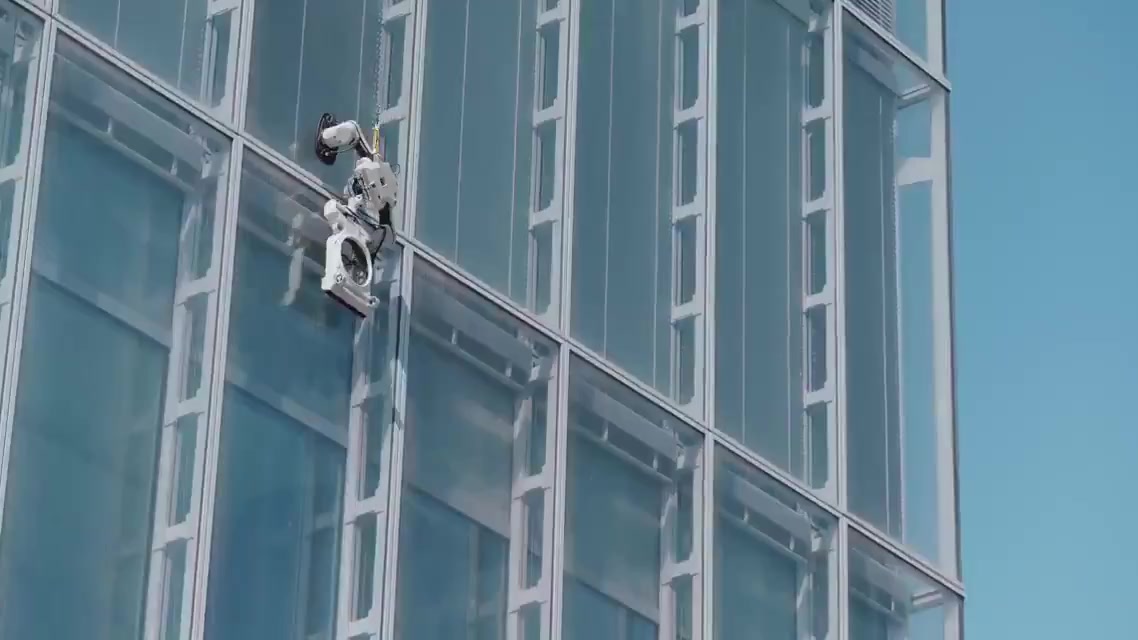
Verobotics’s robots climb building exteriors to clean and scan façades. This solves a great problem. Exterior cleaning and inspection has long relied on lowering a person from a roof, which is risky and limits work to a few times a year. Robots now solve it with safer, more frequent operations.1
Verobotics Company Background
Verobotics was founded in 2020 by Ido Genosar and Itay Levitan in Tel Aviv, Israel.4 The startup received lead investment from TAU Ventures, Tel Aviv University’s VC arm, along with other angels. It also graduated from Intel’s Ignite growth accelerator program.4
Headquartered in Tel Aviv, the company focuses on robotics, AI, and automation for tall building facade cleaning and inspection. This work aims to improve safety, building management, and energy efficiency.1 Verobotics represents an emerging player in urban infrastructure automation.
The Ibex Robot: Product Details
The robot is named Ibex, an AI-powered, camera-scanning machine weighing under 10 kilograms, or 22 pounds.2 It is lightweight, portable, and requires no roof equipment like cranes or railing systems.1 One person can deploy and manage multiple units easily.
Ibex works autonomously on high-rise facades for cleaning and inspection tasks. Its design allows for easy transport and installation on every roof.4 This makes it practical for building owners with in-house teams, offering quick return on investment.1
Technical Breakdown
Ibex uses onboard cameras to scan surfaces, detect window frames, and ensure full coverage.2 Sensors continuously track motion, location, and the surface around it.3 Machine-learning algorithms analyze data to spot flaws like leakages or breakages.4
Data from cameras and sensors feeds to a hub for real-time analysis. This builds datasets for a digital twin of the building.3 The cleaning head dangles for full range of motion while the suction base stays anchored securely.
Real-World Deployments and Capabilities
Ibex launched in a U.S. first in Dallas for high-rise window cleaning and digital-twin mapping.2 It works up to four times faster than human crews due to continuous operation and on-demand use. In Hong Kong, Verobotics signed a $5.4 million deal with Robocore for dozens of robots over three years starting Q3 2023.4
These facade cleaning robots spot issues like cracks and document them for predictive maintenance.3 Deployments show they handle exteriors of high-rises effectively. Early results point to reliable performance in real conditions.
Applications and Impact
Facade cleaning robots target exterior cleaning and inspection of tall buildings. They replace risky methods like lowering workers from Building Maintenance Units.1 This enables more frequent servicing, proactive fixes, and year-round aesthetics.1
The robots provide predictive maintenance data to cut costs, extend facade life, and boost safety.2 Building owners gain streamlined upkeep without weather limits. Overall, they shift maintenance from reactive to planned.
Competitors
Competitors include Skyline Robotics with its Ozmo robot, deployed on a 45-story building in New York City. KITE Robotics focuses on sustainable cleaning for glass and metal facades.5 Verobotics stands out for budget-sensitive projects and early adopters, with distribution in New York and Hong Kong.5
Paths Forward / Looking Ahead
Verobotics plans gradual deployment in the US, Australia, Hong Kong, and Israel.4 The Hong Kong deal could see robots on hundreds of buildings soon. Frequent servicing will keep structures healthy, much like regular car washes for buildings.2 Questions remain about battery life during long climbs, but ongoing improvements address such challenges.
These facade cleaning robots save lives by eliminating high-risk manual labor on skyscrapers. Yet they may displace traditional window cleaning jobs, sparking debate on automation’s role. New opportunities arise in robot operation and data analysis, balancing progress with workforce shifts. Society must weigh safety gains against employment changes.
Leave a Reply