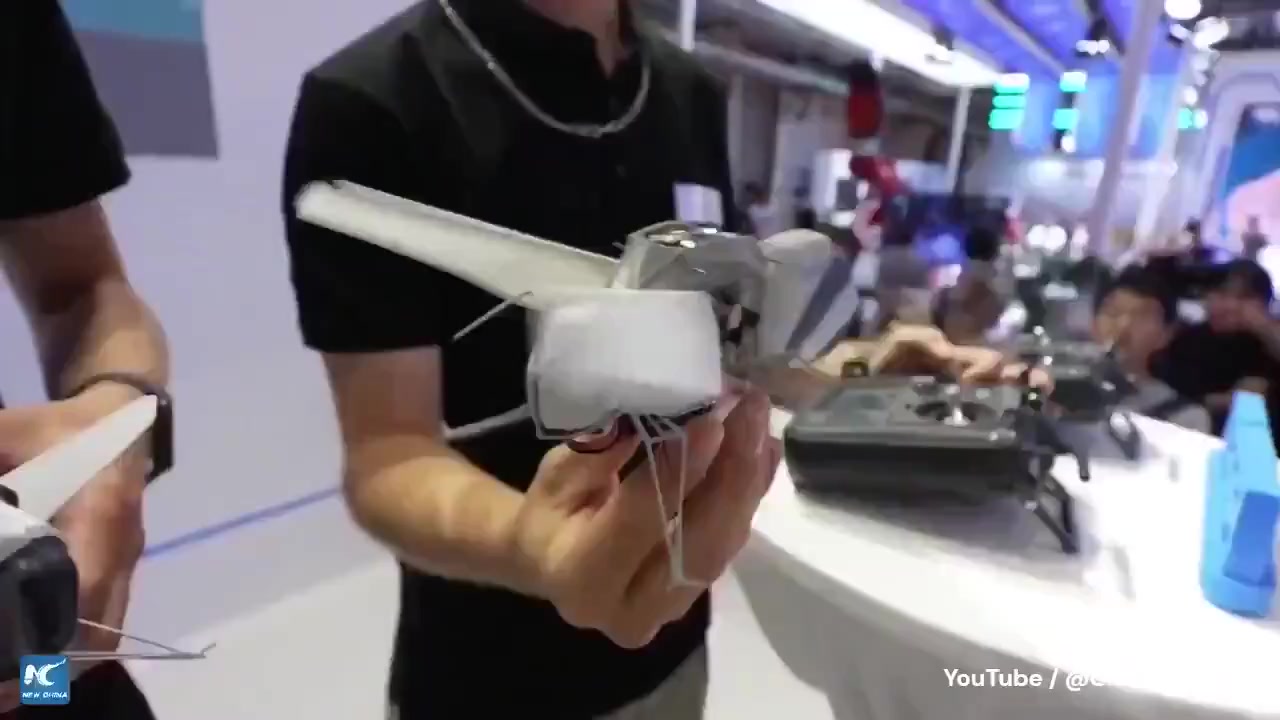
A recent exhibition featured a Bee Robot demonstrating its flight capabilities, captivating onlookers with smooth, bee-like movements. Shared via social media, the clip highlights advances in robotics from the 2025 World Robot Conference in Beijing.13 This tiny machine points to the growing field of bio-inspired designs.
The Company Behind the Bee Robot
Festo, through its Bionic Learning Network, developed the BionicBee, also known as the Bionic E.2 This German company focuses on innovative robotics that mimic nature. Their work shows how engineering can closely replicate biological flight.
The robot weighs just 34 grams, making it lightweight for agile maneuvers.13 Its frame is 3D printed, with carbon fiber inside and foam for the tail, head, and wings.2 Such materials keep the structure strong yet light.
Flapping-Wing Flight Mechanism
The Bee Robot flies solely by flapping its wings, without any extra propulsion.2 A control board ensures stability during flight. This design mirrors how real bees achieve lift and control.
At the conference, it showed lifelike autonomous flight.1 Observers noted its precise movements and buzzing sound. The demostration drew comments on swarm intelligence and economical AI.
Swarm Robotics in Action
The Bionic E can operate autonomously and join swarms of six or more units.12 This capability suggests uses in coordinated tasks. Replies to the video praised swarm intelligence taking flight.
Value of Reproducing Nature
Bio-mimicry offers clear benefits in robotics. By copying bee anatomy and flight, engineers create efficient, low-power machines. This approach proves more economical than traditional designs, as one commenter noted.
Nature has optimized flight over millions of years. Reproducing it reduces trial-and-error in development. The Bee Robot exemplifies how such imitation drives practical innovation.
Potential Applications
These robots hold promise for environmental monitoring, precision pollination, and search-and-rescue operations.1 Their small size allows access to tight spaces. In agriculture, they could aid declining bee populations.
Paths Forward / Looking Ahead
Advancements in Bee Robot technology could redefine swarm robotics for real-world deployment. Integrating better AI will enhance decision-making in dynamic environments like forests or disaster zones. As costs drop, swarms might handle tasks too risky or tedious for humans, building on the economical edge of bio-inspired designs.
Reproducing nature’s efficiency positions these robots as key players in sustainable tech. Future iterations may incorporate advanced sensors for pollination or surveillance. Overall, this path promises scalable solutions that blend machine learning with physical agility.
Related Articles
- Buzzing Innovation: Bee Robot Takes Flight at Massive CES 2026
- Meituan’s Bumblebee Robots Bring Autonomous Food Delivery to Shenzhen Airport Gates
- China’s Mosquito-Sized Surveillance Drone: Stealth Tech from NUDT
Leave a Reply