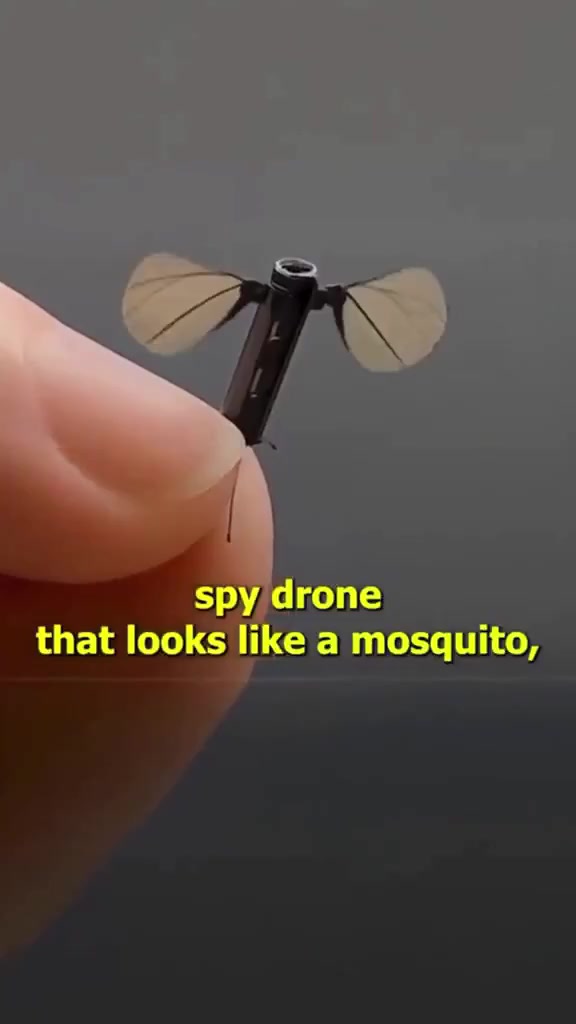
China has introduced a mosquito-sized drone that blurs the line between fascination and concern in surveillance technology. Developed by the National University of Defense Technology (NUDT) in Hunan province, this micro aerial vehicle (MAV) measures just 1-2 cm long and weighs 0.3 grams.1 Unveiled through state media in mid-June 2025, it promises capabilities for stealth operations indoors.5
The Developers and Timeline
NUDT, a state-owned defense research institution focused on military technologies, led the project.14 Student researcher Liang Hexiang showcased the drone on CCTV-7 on June 20, 2025, holding it delicately in his hand while explaining its potential for battlefield reconnaissance.7 The initial public reveal came earlier on June 14 via a CCTV report.5
This timeline underscores China’s push into micro-scale robotics for defense applications. While primarily a proof-of-concept, the demonstration highlighted rapid progress in compact engineering.1
Design Mimicking a Real Mosquito
The drone sports leaf-shaped yellow wings, a slender black body, and three hair-thin legs to closely resemble an actual insect.2 Its wings flap up to 500 times per second, allowing for silent and erratic flight patterns that evade typical detection.17 Constructed from non-metallic, lightweight materials, it boasts a radar cross-section below standard surveillance thresholds.1
A prototype variant features four controllable wings, operated via smartphone in lab settings.7 These design choices prioritize biomimicry for blending into environments seamlessly. The overall form factor enables access to confined indoor spaces.1
Embedded Sensors and Controls
Despite its tiny frame, the drone integrates ultra-compact cameras, microphones, and sensors for capturing visuals, audio, and electronic signals.13 Power systems, sensors, and control circuits fit neatly within the structure.4 Operators currently manage it through a smartphone interface during laboratory tests.1
This level of miniaturization represents a significant engineering feat. The setup allows for real-time data relay in controlled scenarios. However, scaling remains tied to current lab constraints.1
Demonstrations in Action
Lab videos depict the drone perching on human skin or fingertips with precision.1 During the CCTV-7 segment, Liang Hexiang described its suitability for information reconnaissance and special missions.7 These displays emphasize its potential in tight quarters.2
The demonstrations stay confined to indoor environments for now. Flight times last only a few minutes per charge. Redeployment requires close operator proximity.1
Applications on the Horizon
Primarily designed for stealth surveillance and intelligence gathering in battlefield scenarios, the drone targets areas larger UAVs cannot reach.1 It could track individuals or eavesdrop discreetly indoors.2 Military and civilian covert reconnaissance represent key use cases.2
Experts note risks for espionage and untraceable criminal activities given its stealth profile.5 Discussions online highlight concerns over expanding Chinese spying tactics westward. The technology evokes sci-fi until real-world deployment looms.1
Current Limitations
Short operational range and battery life restrict it to brief indoor flights.12 Frequent recharging necessitates redeployment near the target area. These factors demand operator proximity for sustained use.2
Fiction Meets Reality
This drone recalls the Black Mirror episode “Hated in the Nation,” where robotic bees meant for pollination turn deadly under hack control. Replies to the original post compare it to similar tech in Japan or claim the U.S. possessed equivalents decades ago. Such parallels shift from entertainment to tangible strategic tools.
Paths Forward / Looking Ahead
Advances in battery and sensor technologies could extend the drone’s range and endurance, transforming it from lab curiosity to field asset.1 Liang Hexiang described the prototype as ready for penetrating battlefields and security systems, signaling confidence in near-term enhancements.5 Integration with swarm tactics might amplify its intel-gathering role in contested environments. Policymakers must weigh these gains against privacy erosions.
While operational hurdles persist, iterative develoment will likely address power constraints over time. Broader adoption raises ethical questions on micro-surveillance proliferation. International norms may evolve to counterbalance military edges from such innovations. Balancing innovation with safeguards remains crucial for global stability.
Sources for this article
- DroneLife: China Unveils Mosquito-Sized Drone for Stealth Surveillance
- Houston Herald: China Unveils Mosquito-Sized Drone
- Boston Global Forum: China Develops Mosquito-Sized Surveillance Drone
- YouTube: CCTV Demonstration of NUDT Micro Drone
- Alestiklal: Mosquito-Sized Drone Transforming Warfare
- The Defense Post: China's Mosquito Drone for Military Use
- Euronews: China Unveils Tiny Spy Drone Like a Mosquito
- Interesting Engineering: Chinese Military Unveils Mosquito-Sized Drones
Leave a Reply