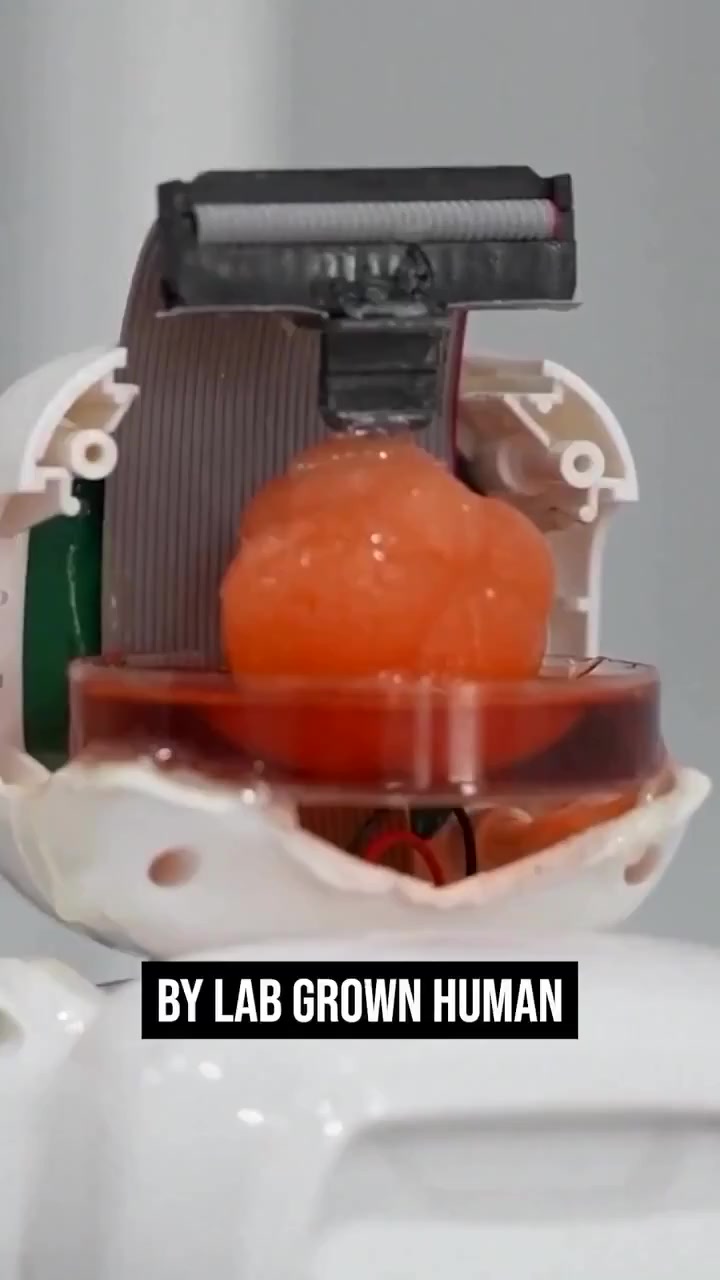
Researchers in China have introduced the MetaBOC system, an open-source brain-on-chip platform that fuses lab-grown human brain organoids with computer chips to direct robotic movements.1 Developed by teams at Tianjin University and Southern University of Science and Technology, this hybrid setup enables living neural tissue to interpret electrical signals from robot sensors and respond with actions like navigating obstacles or grasping objects faster than conventional AI models.2 This advance directly illustrates how robots and AI could mark humanity’s next evolutionary phase by blending biological intelligence with mechanical systems.
Background and Development Team
The MetaBOC project emerged from collaboration between Tianjin University’s Haihe Laboratory of Brain-Computer Interaction and Human-Computer Integration and the Southern University of Science and Technology.1 Ming Dong, vice president of Tianjin University and executive director at the Haihe Laboratory, leads efforts in this domain.2 Professor Li Xiaohong from Tianjin University also contributes to the research team.2
MetaBOC stands for ‘open-source brain-on-chip intelligent complex information interaction system.’1 Each organoid in the system contains roughly 10,000 brain cells, derived from human stem cells to form three-dimensional tissue cultures.3 These organoids recieve low-intensity ultrasound stimulation during cultivation to promote neural activity and maturation.6
Technical Framework
The system employs spherical, 3D organoids enhanced by low-intensity focused ultrasound, which fosters richer neural activity and better cell differentiation into neurons.6 A neural interface chip links the organoids to electronic devices, encoding sensory inputs and decoding neural outputs.6 AI algorithms bridge communication between the biological tissue and digital components, as brain cells process electrical signals akin to computers.4
Human neurons on silicon chips interpret electrical signals from robotic sensors and generate responses accordingly.3 Scientists train these mini-brains first in virtual environments before real-world deployment.7 This biocomputing method leverages the inherent adaptability of living neural networks.
Demonstrated Robotic Capabilities
MetaBOC-guided robots have successfully avoided obstacles and tracked targets in tests.5 They also grasp and manipulate objects, showcasing practical task performance.3 According to experts like Brett Kagan from Cortical Labs, these neuron-enhanced systems learn quicker and more efficiently than pure AI chips.3
The organoids process sensor data as electrical impulses, enabling autonomous control.7 This marks a shift from rigid programming to biologically inspired learning.
Comparisons to Existing Efforts
Prior Western projects, such as DishBrain playing Pong or Brainware recognizing voices, laid groundwork for MetaBOC.3 Unlike task-specific narrow AI, MetaBOC emulates biological learning processes.3 It challenges assumptions that AGI requires massive transformers and data centers.
Potential Applications and Impact
Targeted at robotics, MetaBOC could enhance complex brain-computer interfaces.4 Future uses might include repairing neurological damage via organoid transplants.1 Ultrasound-treated organoids have shown promise in mouse models of microcephaly.6
Brain organoids serve as promising models for basic intelligence studies.6 The grafts develop host-derived vasculature for advanced maturation.6
Paths Forward / Looking Ahead
The fusion of human neural tissue with robotics in MetaBOC signals a pivotal evolutionary extension for human intelligence into mechanical forms. Biological systems offer adaptive learning that surpasses current silicon-based AI in efficiency for certain tasks, potentially accelerating progress toward hybrid intelligence paradigms. As organoids mature with technological interfaces, they could enable robots to handle unstructured environments better than today’s models, reshaping industrial and exploratory applications. This trajectory supports the view that AI and robots extend human evolution beyond biological limits.
Challenges like nutrient supply, pathogen protection, and ethical considerations remain, yet the open-source nature of MetaBOC invites global refinement. Advances in organoid transplantation into living brains demonstrate functional integration and maturation, hinting at therapeutic potentials alongside computing gains. Over time, these biocomputers might redefine machine intelligence, prioritizing biological verisimilitude over brute computational force. Pursuing this path could yield systems that intuitively interact with the physical world in human-like ways.
Sources for this article
- Chinese scientists build robot controlled by human brain cells
- Lab-grown human brain tissue used to control robot
- A Chinese Company Built a Robot With Human Brain Cells – We Officially Crossed The LIMITS!
- ‘Brain-in-a-jar’ biocomputers can now learn to control robots
- Researchers develop brain-on-a-chip system, advancing brain-computer interfaces
- Chinese scientists create robot with brain made from human stem cells
- Mini human brains are now controlling intelligent robots in the lab
- Chinese Scientists Create A Robot With A Brain
Leave a Reply