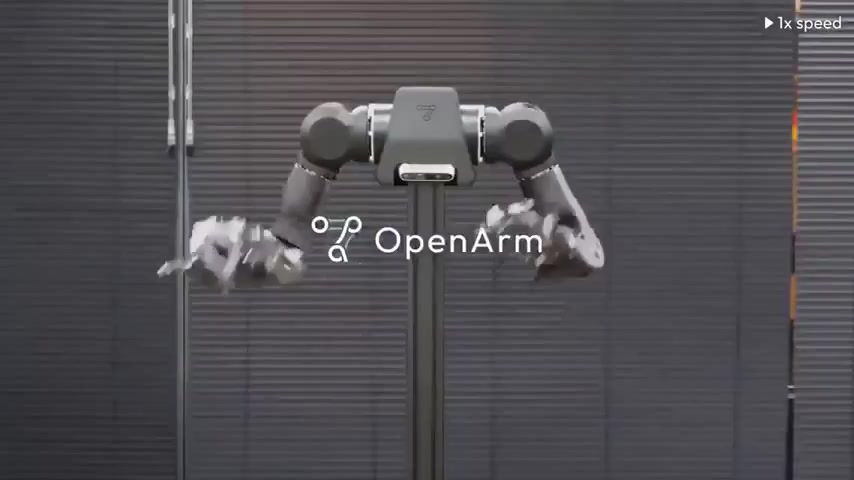
Good progress is being made on open hardware for robotics. OpenArm is an open-source humanoid arm platform developed by Enactic in Tokyo. It includes full CAD files, control code, firmware, and simulation tools that allow users to build, modify, and test the system themselves.
Being open sourced means the complete designs and software are shared freely for anyone to use or improve. This approach lowers barriers for researchers and hobbyists who want to experiment without starting from scratch. It encourages collaboration across different teams around the world.
Think of it like sharing a detailed recipe for a complex meal. Instead of each cook figuring out every step alone, they get the full list of ingredients and instructions to follow or tweak. That shared recipe helps more people cook successfully and even create new variations.
The arm features a human-scale design with backdrivable motors for safer interactions. It supports contact-rich tasks that are important for physical AI work. Developers can access the full set of files to adapt it for specific needs.
Control happens through CAN-FD protocols which allow reliable communication between components. Simulation tools help test movements before building physical versions. This reduces costs and risks during early development stages.
Applications include teleoperation where a human guides the arm remotely. It also aids in collecting real-world data for training AI models. Such tools support research into manipulation skills that robots need in everyday settings.
Compared to closed systems, this open model speeds up innovation by letting others contribute fixes or features. Teams can verify performance claims through the shared documentation. It builds trust in the hardware over time.
Future work may focus on expanding compatibility with other robot platforms. More users could then integrate the arm into larger projects. This growth depends on community feedback and ongoing updates to the files.
Paths Forward / Looking Ahead
Open designs like this one point toward wider access for physical AI experiments. Researchers gain the ability to customize arms without high licensing fees. Over time this could lead to faster progress in areas such as home assistance robots. The shared resources make it easier for smaller groups to participate in meaningful work.
Challenges remain around quality control when many people modify the base design. Clear documentation helps address some of these issues. Continued contributions from the original team will keep the project stable. Overall the open approach offers a practical path for broader adoption in robotics.
Related Articles
- Kame Robot: Open Source Quadruped Innovation
- Agibot’s Q1: The Backpack Humanoid Ushering in Personal Robotics Research
- Unitree G1 Humanoid Robot Jumps and Punches in Human Training Demo
- Revolutionizing Robotics: OpenMind AGI and Unitree’s Partnership for Open-Source Innovation
Leave a Reply