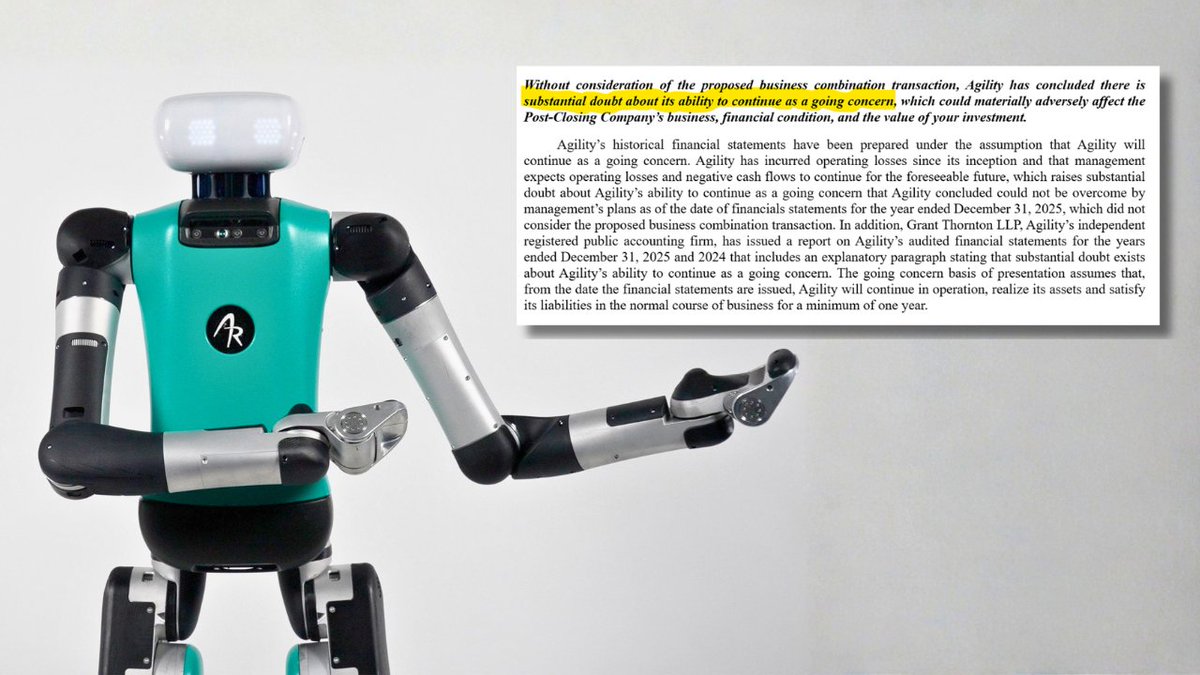
Agility Robotics is an Oregon company working on humanoid robots for warehouse jobs. Recent online discussion has raised questions about its future after a 2026 SEC filing came to light. The filing reportedly showed management concerns about the firm staying in business. This has sparked debate among observers about the challenges facing robotics startups.

What the Filing Suggests
The document from Agility Robotics lists its main office in Salem Oregon.3 It ties into plans for a public listing through a deal with Churchill Capital Corp XI.2 If true this could mean the company is seeking new investors to keep operations going. Such moves often happen when cash flow is tight for young tech firms.
Agility makes the Digit robot which is built for tasks like moving boxes in factories.4 The robot has arms and sensors that let it work in spaces designed for people.5 It can handle loads up to forty pounds in tests and uses a robots as a service model for customers.6 This approach bundles the machine with software and upkeep rather than selling it outright.
Understanding the Business Side
Startups in robotics often burn through money quickly while building prototypes. If management beleived survival was at risk it points to real pressure from costs and slow sales. The company has nine deployments noted in public talks but that may not cover all the hidden work needed to scale. Investors watch these filings closely because they reveal internal views not shared in demos.
Humanoid robots face limits like hand control space for movement and how long they run without charging.1 Agility claims Digit meets some of these needs better than earlier models like Cassie. Yet competitors are also advancing and the market may pick winners based on real orders not videos. This filing could affect how partners view the firm going forward.
The planned public listing aims to make Agility the only U.S. listed pure play humanoid company with commercial use cases.2 That status might bring more attention and funding if the deal closes. For readers new to this it means the firm is trying to trade shares on a stock exchange like bigger companies do. Success here depends on proving the robot can earn money steadily.
Paths Forward
Agility could focus on expanding its current warehouse contracts to show steady revenue growth. This would help counter doubts from the filing by proving the product works in daily operations. Partnerships with larger firms might also bring in needed capital and expertise. Over time better battery life and arm designs could widen its appeal in logistics.
Another route involves refining the robots as a service offering to lower customer risk. If more companies sign up for ongoing support it builds a recurring income stream that investors like. The team would need to address any gaps in uptime or payload handling quickly. Overall the next year will test whether the company can turn technical progress into lasting business results.
Related articles
- Humanoid Summit Highlights: Networking with Agility Robotics CTO Pras Velagapudi and the Rise of Digit
- Unitree R1: Affordable Humanoid Robot Revolutionizing Warehouse Labor
- Goldman Sachs Predicts $38 Billion Humanoid Robot Market by 2035 – But Likely an Underestimate
- Figure AI’s BMW Robot Deployment: 11 Months of Real-World Success Amid Hype Criticism
Leave a Reply