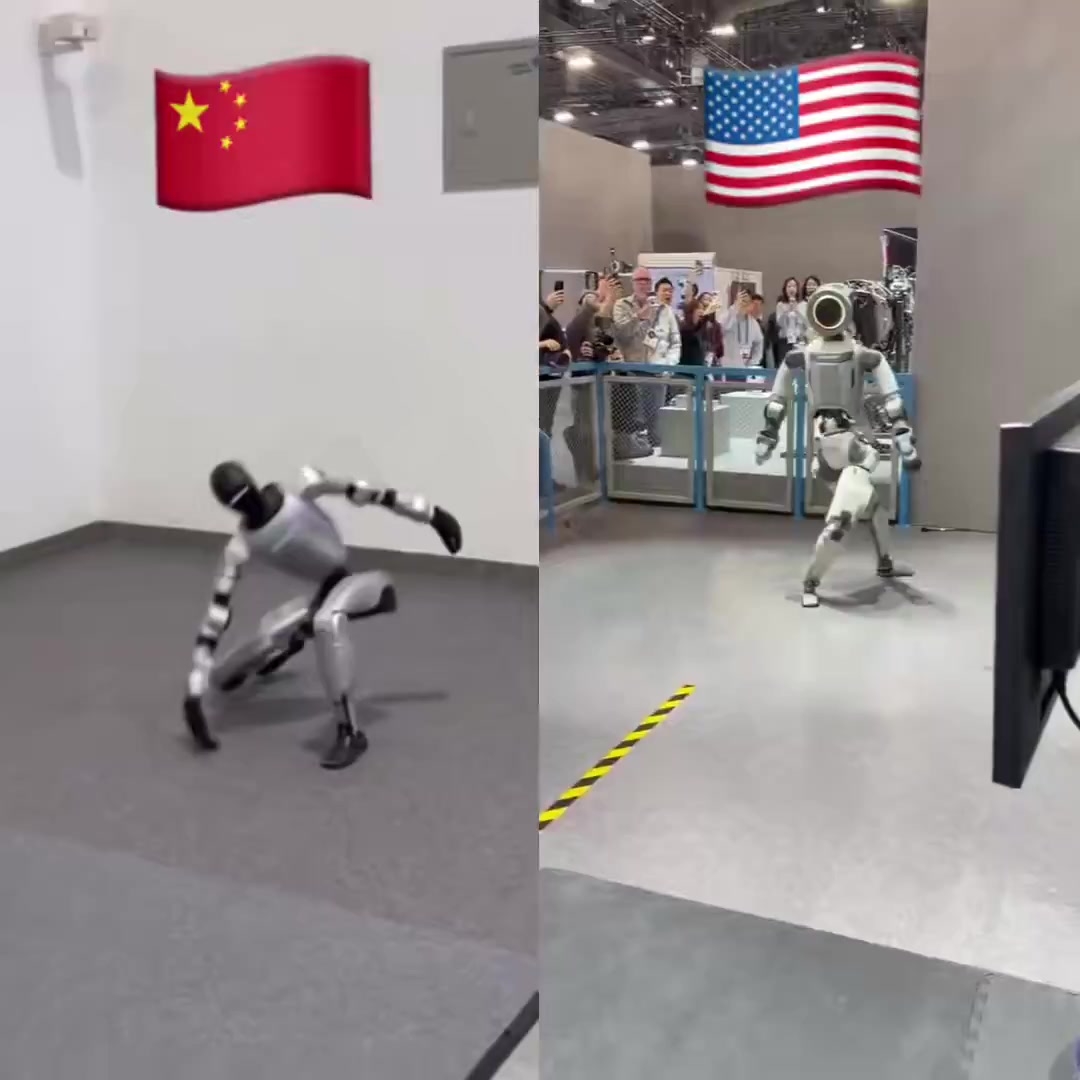
Watched that viral clip of humanoid robots flipping. The Chinese one, Unitree’s H1, sticks the landing like a gymnast–no wobble, pure poise. But Atlas from Boston Dynamics trips up, then bounces back. That’s the crux, isn’t it? Real life throws curveballs, and recovering is king.
Unitree Robotics, founded in 2016, unveiled the H1 in 2023. It hits speeds of 3.3 meters per second, uses M4 joints for torque. Backflip video shows it leaping, rotating, landing on feet without hands. Preprogrammed perhaps, but seamless.
Atlas, now under Hyundai since 2021, has been flipping since 2017. Recent electric version stumbles in demos but self-corrects using model-predictive control. Intentional, some say, to highlight balance algorithms. Not just tricks–it’s about adapting to chaos, like uneven terrain or pushes.
The rivalry heats up. China’s push in tech yields polished demos; US focuses on resilience. Replies note differences: real-time vs scripted, hand support or not. Boston Dynamics isn’t lagging–they’re emphasizing durability. Drift to global competition, then back: this drives innovation for disaster response, manufacturing.
No lectures. Just facts from the footage and specs. Robustness isn’t perfection; it’s rebounding. Atlas embodies that, even if H1 looks flashier.
Leave a Reply