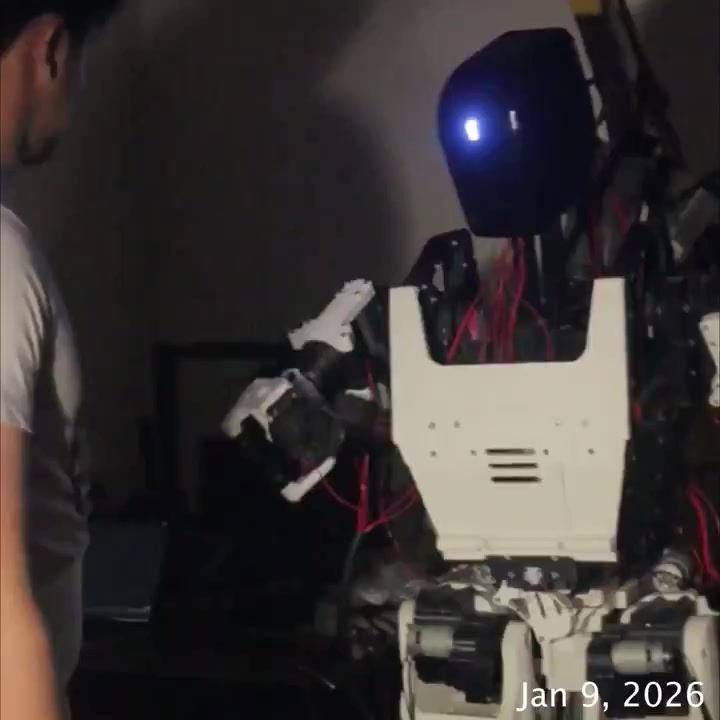
Vanar Robots, a startup based in Mumbai, India, has unveiled a prototype of its first humanoid robot, named Vanar Generation 1.12 Founded in 2024 by Aryan Wagh, the company operates as a small robotic lab with 2 to 10 staff members and focuses on creating human-shaped robots to assist with physically demanding, repetitious, or unsustainable jobs performed by humans.1 This development highlights India’s emerging presence in humanoid robotics, as showcased in a recent social media post that drew mixed reactions from the public.
Company Background
Vanar Robots is bootstrapped and emphasizes in-house development of key components.3 Based in Maharashtra, the firm’s mission centers on partnering robots with human labor for strenuous real-world tasks.1 With limited public information available, the startup represents a grassroots effort in a field dominated by larger players.
The prototype reveal aligns with broader trends in decentralized physical AI, sometimes referred to as DEPAI, potentially slated for wider adoption around 2026.4 Vanar’s approach underscores the potential for small teams to contribute meaningfully to robotics.
Prototype Specifications
Vanar Generation 1 is designed to stand 5’9” tall and weigh 50 kg.1 The current prototype features a partial physical structure, including one arm, half a body, and a head skeleton.
A demonstration video on YouTube highlights the robot’s early capabilities, showing basic movements.3 This stage reflects the iterative nature of humanoid development, where full functionality comes after multiple refinements.
Technical Innovations
Key to the design are in-house high-torque actuators, including a 1-kg unit delivering 350 Nm of torque – sufficient for safely carrying humans in emergencies.13 These components enable the robot to handle demanding physical tasks.
Public Reactions
The social media post showcasing the prototype elicited a range of responses, from skepticism about its appearance – comments likening it to outdated models or questioning visible wires – to encouragement like “All the best ahead.”
Positive notes celebrated its Mumbai origins with phrases such as “Made in Mumbai. Built for the future.” Despite jokes about it resembling a flat or drunken state, the reveal signals growing interest in Indian robotics innovations.
Cultural Influences in Robotics Design
One intriguing aspect of Vanar Robots’ work is how the cultural context of its creators might influence the robots they build. Indian engineering traditions, known for resourcefulness and adaptability, could manifest in designs optimized for diverse, real-world environments.
Interacting with such robots might reveal subtle national characteristics – perhaps a focus on reliability in chaotic settings or intuitive interfaces reflecting multicultural hospitality. Positively, this multiculturalism enriches global robotics, allowing users to discern origins through design philosophies while fostering respectful cross-cultural exchange.
Paths Forward / Looking Ahead
Vanar Robots must prioritize refining the prototype toward full deployment, addressing public concerns like visible tethering by advancing wireless power and control systems. Scaling production while maintaining in-house inovations will be crucial for competing globally. As India’s robotics ecosystem matures, collaborations could accelerate progress, positioning Vanar as a key player in affordable humanoid labor solutions.
Broader implications include transforming labor markets by automating hazardous jobs, with cultural diversity in designs promoting inclusive technology adoption worldwide. Sustained investment in actuators and AI integration will determine long-term viability. Ultimately, efforts like Vanar’s pave the way for human-robot partnerships that respect both efficiency and human values.
Leave a Reply